DISCOGNIA Decision Intelligence Systems
About

A research company that ships.

Discognia is a decision intelligence company. We research, design and build systems for decisions that cannot be reduced to a single number or a simple rule.

We write our own software, run our own infrastructure, and develop and protect our own intellectual property. There is no agency behind our products and no white label under them. The people who design the systems are the people who build them.

2founders — a decision intelligence system architect and a product engineer
5products — four in daily use, one in development
11languages served by our first product family
5patent applications filed with TÜRKPATENT

The intellectual property is shared by the founders, and every line of the software is ours.

Founder

Named, not hidden.

We do not believe complex systems should hide behind a company logo. At Discognia the people responsible for the research, the architecture, the engineering and the inventions are the people building the systems themselves.

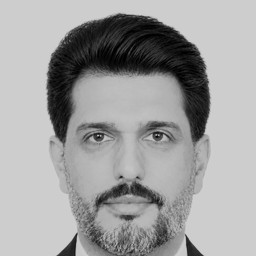
Mohammad Zeinalialiabadi

Mohammad Zeinalialiabadi

Founder & Managing Director · Product Engineering & System Architecture

Mohammad Zeinalialiabadi is an Iranian researcher, inventor, author, university lecturer, electronic engineer and technology consultant. His work spans electronics, telecommunications, control systems, artificial intelligence, technology innovation, radio astronomy, digital media and interdisciplinary research.

He founded Emdad Gostar Moj, an electronics research and development company, in 2004, and developed and commercialised its Phoenix DVB/IPTV broadcasting system and Hunter detection device. He later built the internet television network for Esteghlal FC. He is the author of eight books and has appeared on Iranian national television for more than twenty years as an author, inventor and technology expert.

Read moreShow less

His academic and professional career is rooted in electronic engineering and telecommunications, with a particular interest in the development and application of emerging technologies. His research covers electronic systems, communication technologies, control theory, nonlinear systems, artificial intelligence, decision-making systems and radio astronomy.

His work in control systems and intelligent decision-making includes research into inverse optimal control and nonlinear systems, reflecting an interest in the mathematical and computational foundations of complex engineering systems. He has also examined the relationship between technology, human decision-making, creativity and innovation.

As an inventor and technology consultant he has been involved in the development and evaluation of technological concepts and solutions, with an emphasis on electronics, digital technologies, artificial intelligence and emerging technology applications. His professional experience extends to digital media technology, IPTV, internet broadcasting and telecommunications infrastructure.

What characterises his approach is its interdisciplinary nature. His work connects engineering and scientific research with artificial intelligence, innovation, technology management, digital communication and applied problem-solving — and with the question of how separate scientific and technical disciplines can be combined into new solutions.

He co-founded Discognia. The company builds decision intelligence systems: software that does not only store and retrieve information but reaches a decision, and can show how it got there. The engines, the applications and the infrastructure are written in-house, and what the company invents it files itself — five patent applications with TÜRKPATENT.

At Discognia, Mohammad leads product engineering and system architecture — the platforms, applications, infrastructure and interfaces that people actually use. He is the principal inventor and architect behind the Ev.me product family and REVERTA, and leads their product engineering, system architecture and intellectual property development.

Products he works on

Books

ELECTRONICSIntroduction to the Principles and Concepts of Electronic
ASTRONOMYIntroduction to Radio Astronomy
CONTROLDiscrete-Time Inverse Optimal Control for Nonlinear Systems
CREATIVITYLessons on Creativity and Ideation
AND FOUR MOREEight books in total, on electronics, engineering, creativity and technical education

Selected work

2004Founded Emdad Gostar Moj, an electronics R&D company
PHOENIXDVB/IPTV broadcasting system — developed and commercialised
HUNTERDetection device — developed and commercialised
MEDIABuilt the internet television network for Esteghlal FC
20+ YRSAuthor, inventor and technology expert on Iranian national television

Areas of work

Electronic engineeringTelecommunications Artificial intelligenceDecision-making systems Control systemsNonlinear systems Inverse optimal controlRadio astronomy Technology innovationEmerging technologies Digital media technologyIPTV & internet broadcasting Technology consultingScientific & technical writing Creativity & ideation

Scientific profiles

mohammadzeinalialiabadi.com →
Research and invention

We publish products, not promises.

Our systems come out of research rather than a template, and the research is aimed at the difficult part of decision-making: how do you make a useful decision when the data is partial, late, conflicting or uncertain?

01

Explainable by construction

Every conclusion should have a reason behind it. Our systems preserve the inputs, rules, assumptions, evidence and alternatives involved in a decision, so the result can be examined rather than simply accepted. A system nobody can audit is a system nobody should trust with a plant, a board or a regulator.

02

Uncertainty is the subject, not the exception

Real decisions rarely arrive with perfect information. We work with uncertainty explicitly — using probabilistic and graph-based models, multi-criteria decision making, optimisation, and human expertise where human judgement belongs. The interesting engineering is not the clean case; it is deciding well when the information is incomplete.

03

Human judgement, computational intelligence

We do not treat human expertise and artificial intelligence as opposing systems. We design architectures in which expert knowledge, data, models and computational reasoning can work together. The objective is not to remove the human from the decision. It is to make the decision better — more structured, more explainable and more actionable.

04

Built to move across domains

A decision architecture should not belong to one industry. The same underlying principles can be applied to property, industry, supply chain, healthcare, defence and other environments where decisions are complex and consequential. Our products are where the research meets the real world.

05

Invention is part of the work

When an existing tool cannot solve the problem, we design one. When the solution is genuinely new, we protect it. The founders share ownership of the company's intellectual property and patent applications, while specific inventions have principal inventors according to the systems they created. The research is ours, the inventions are ours, and the software is ours.

How we work

In-house.

We are engineers and researchers. We design our own systems, we write our own software, we run our own infrastructure, we conduct our own research, and we file our own patent applications.

Everything we build starts with the same principle: understand the decision before you automate it.